



Leaking roof – how to waterproof house roof leaks
Causes leading to leaking roof situations
To be able to offer effective and radical treatment solutions for leaking roof situations, first you need to determine the exact cause of the leak. Engineers at Dang Phat Construction say there are quite a few causes for roof leaks, but the most popular ones include:Structures degraded due to long-term use
According to natural laws, structures built for many years will definitely degrade and wear out more or less. Especially with construction techniques from decades ago, they will not guarantee matching up to the present. Therefore, the occurrence of incidents is unavoidable, typically the phenomenon of leaking roofs. The solidity of architecture is reduced, water invades inside and destroys.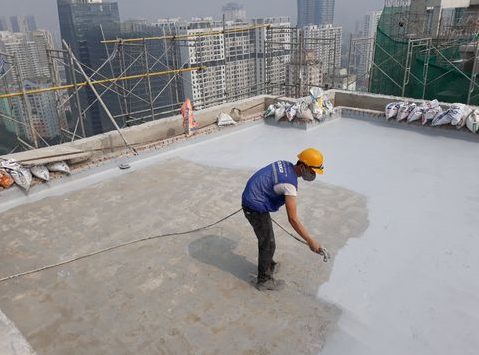 A leaking roof is something no one wants
In addition, the typical hot and humid climate of Vietnam has continuously impacted structures for many years. Therefore, degradation and leaks appear as a very obvious incident.
A leaking roof is something no one wants
In addition, the typical hot and humid climate of Vietnam has continuously impacted structures for many years. Therefore, degradation and leaks appear as a very obvious incident.
Weak foundation structures, impacts from external factors
Weak foundations along with loose structures, or being subsided and unable to bear loads can lead to walls and roofs cracking. When it rains, water will permeate along those cracks causing leaking roofs, and if left for the long term it can cause house collapse. In addition, external impact factors such as adjacent houses digging foundations, piling, subsiding… cause wall structure fractures, showing leak statuses at many positions, including the roof part.Rooftops stagnating water for a long time
利益 Rooftops are the place directly exposing to rain and sun, so leak phenomena very easily occur. In particular, structures designed at construction times that did not reach slope standards, had no gathering gutters, no drainage pipes, or drainage pipes clogged due to not being cleaned regularly, uneven rooftop surfaces, continuous rain with large water volume… over time lead to water soaking, and stagnated water will soak down to ceilings causing leaking roofs.Water systems leaking causing permeation
It can be seen that this is one of the quite common causes making roofs leak. This status usually happens in multi-story houses and apartments due to installing hidden water pipe systems between floors and rooms. Frequently found locations are bathrooms, toilets… Leaking roof statuses are usually due to leaks from connection valves of water pipes and drainage systems. This includes pipes inside walls of landlords, pipes in wall partitions of neighbors adjacent to landlords, bathroom floors of upper floors…Poor quality waterproofing paint
Poor quality paint is paint that is not verified for quality and safety. This could be fake paint, or paint mixed with impurities, so the ingredients and functions are not like the original. Using poor quality waterproofing paint leads to the function of preventing leaking roofs not being developed. Water can still soak deep into ceilings causing leaks. Leaking roofs impact aesthetics, reduce project lifespans, and threaten user health.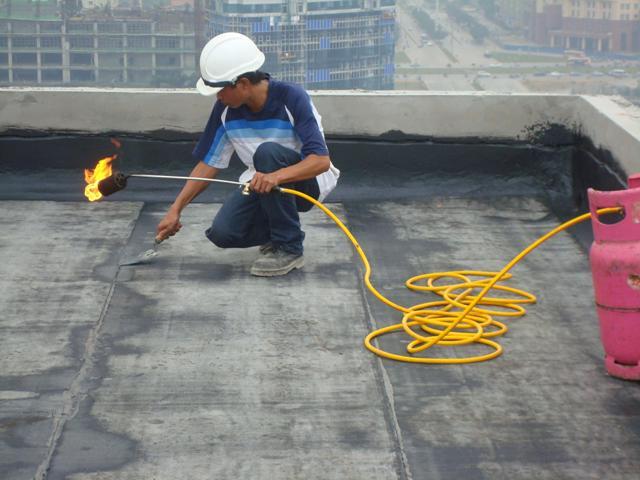 Even though waterproofing has been done, the roof still leaks
Roof waterproofing process not guaranteed
- Choosing wrong waterproofing methods: roof waterproofing processes are extremely important to ensure whether construction effectiveness is achieved. Depending on each structure material, property, and construction type, there will be appropriate waterproofing methods. It’s not always possible to use bitumax waterproofing membranes to patch cracks or use glue for comprehensive waterproofing.
- Constructing roof waterproofing not according to correct technical requirements: constructing bitumax membrane edges sloppily or near each other, applying too much or uneven heat reduces torch-applied membrane quality. Spraying or brushing specialized waterproofing agents not according to requirements of manufacturers, for example, chemical waterproofing needs brushing/spraying 3 layers but workers only brush 2 layers, this can make the whole structure leak even though roof waterproofing was done.
Consequences when roofs leak
Leaks are a phenomenon making you extremely uncomfortable because it causes many serious harms. Below are harms of leaks:- Impacts aesthetics of the house due to appearance of patchy stains, yellow, gray, black colors, and mold.
- The air in the house becomes musty and confined, leading to respiratory tracts and health of members being affected, especially families with elderly people and young children.
- Structures quickly degrade, wasting much cost for repair work.
- Leaking roofs impact hidden electrical lines, which is extremely dangerous because it causes short circuit phenomena, leading to fire and explosion, threatening lives.
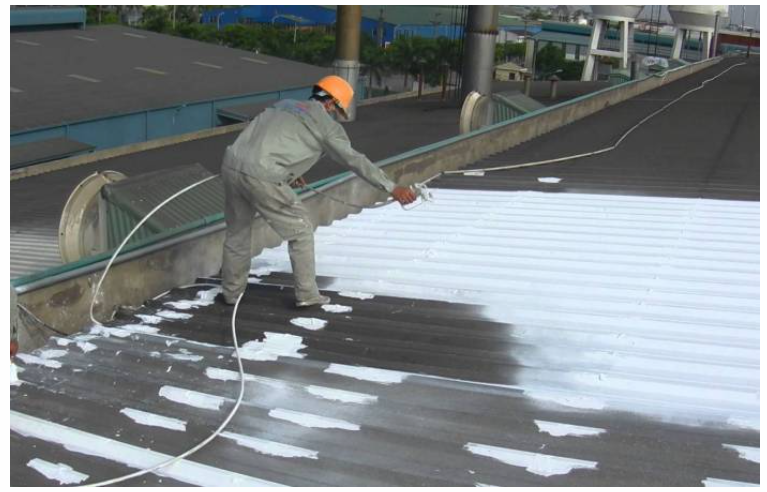 Leaking roofs cause loss of aesthetics, affect health, and project structures
With those consequences from leaking roofs mentioned above, engineers recommend everyone should perform waterproofing for houses right from the start when projects are just completed. This will minimize bad impacts to your house, saving costs because houses just completed have not leaked yet, so they are easy to construct, and effectiveness is also longer.
Leaking roofs cause loss of aesthetics, affect health, and project structures
With those consequences from leaking roofs mentioned above, engineers recommend everyone should perform waterproofing for houses right from the start when projects are just completed. This will minimize bad impacts to your house, saving costs because houses just completed have not leaked yet, so they are easy to construct, and effectiveness is also longer.
How to handle leaking ceilings
After detecting leaks, you need to proceed with handling as early as possible. Below are some experiences to handle leaking roofs for each roof type that you can reference and apply:With concrete roofs
First, you need to go up to the roof to check and determine the exact damage degree of the structure. Should use supporting climbing items like telescopic aluminum ladders to ensure safety. Next, apply an extremely simple treatment method as follows: use specialized waterproofing paint to paint a thick layer onto crack positions or use a cement mix with sand to plaster tight the positions causing leaks. Don’t forget to check again the drainage system established on ceilings to ensure.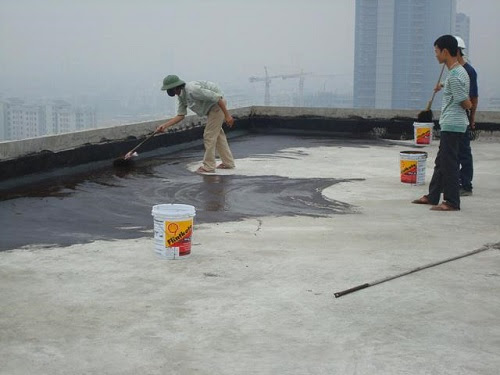 Handling leaking concrete roofs
With metal roofs
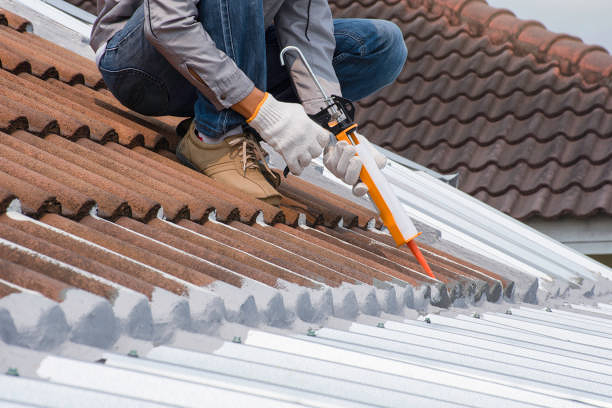
Metal roofs have different properties from concrete roofs. Therefore, before applying ways to handle leaking roofs, you need to use a clean towel to wipe the entire area needing waterproofing. In cases where metal roofs are rusted, it is necessary to use a brush or apply natural-source cleaning measures to remove rust. Next is checking its damage level just like handling concrete roofs before conducting treatment methods. Leaking metal roofs usually have 2 cases:- Metal roofs punctured at positions between sheets: handle leaking roofs by using silicon leak prevention glue or cement to block puncture holes if holes are small. In cases where puncture holes are too large and cannot be fixed with silicon, use another metal sheet piece having length and width larger than the old punctured sheet piece by about 10cm. Then use adhesive glue to attach the sheet overlapping the puncture position.
- Metal sheets open or punctured at junctions: along with usage time, sheets usually rot or expand wide at connection positions. This makes rainwater stagnant, flowing back into ceilings. In this case, you can use silicon glue to shoot directly into 2 sides of junction points. To avoid rainwater falling inside before glue dries, you should use bricks to press onto glue positions.
With tile roofs
 Leaking tile roofs only need finding broken or displaced tiles and replacing them with new ones
Leaking tile roofs are usually due to some tile being cracked or displaced from its original position due to impacts of wind and storms. Repairing leaking roofs in this case is very simple, you only need to replace those damaged tiles with new tiles into the leaking positions.
Leaking tile roofs only need finding broken or displaced tiles and replacing them with new ones
Leaking tile roofs are usually due to some tile being cracked or displaced from its original position due to impacts of wind and storms. Repairing leaking roofs in this case is very simple, you only need to replace those damaged tiles with new tiles into the leaking positions.
Ways to prevent roof leaks
To avoid “locking the stable door after the horse has bolted”, you should perform roof leak prevention right when completing projects. Below are some effective roof leak prevention ways for lifespans up to 30 years shared by the engineer team of Dang Phat Construction:Using Neoproof PU W roof waterproofing
Neoproof PU W is a roof floor waterproofing material trusted by engineers. It is a water-based PU roof floor waterproofing chemical having outstanding mechanical durability and water resistance capabilities. When coated onto surfaces, it forms a moisture barrier membrane preventing water from permeating along with UV rays and mechanical stress resistance capabilities.
Roof waterproofing using Neoproof PU W
The product is used to prevent leaking roofs for concrete roof surfaces, cement roof sheets, mosaics, cement mortars…
Product advantages:
- Ideal solution used for walkable roof waterproofing
- Has high mechanical strength
- No pinholes appear on surfaces during curing processes
- Protects even PU foam insulation layers
- CE certified
- Friendly to environment, safe for health (manufactured from water-based Polyurethane materials)
- Simple construction
- Withstands temperatures from -15 degrees C to +80 degrees C.
Preventing leaking roofs with Neoproof PU360
Neoproof PU360 is a water-based, elastic, modified PU waterproofing chemical. When used, this material forms a completely sealed membrane, blocking water and moisture, preventing leaking situations for roofs. Using Neoproof PU360 to prevent leaking roofs Neoproof PU360 also has good crack-bridging capabilities, so it is ideal in covering horizontal surfaces and vertical surfaces before tiling or plastering cement. Advantages:- Increases warp resistance capabilities for structures
- Fast drying
- Crack bridging capabilities
- Friendly to environment
- Perfect adhesion with construction materials like concrete, plaster, masonry walls, wood, metal.
- High economic efficiency, easy to use.
Reputable roof leak waterproofing material supply unit
Currently, market materials preventing leaking roofs are quite diverse, but not every unit guarantees criteria about quality and price. Users if not studying carefully can easily buy fake goods or low quality goods, causing impacts to waterproofing effectiveness as well as durability for projects. Dang Phat Construction is a chain system of supermarkets having national scale, supplying diverse waterproofing materials, including house roof waterproofing materials. With 100% genuine guarantees, uniform prices at stores, creating trust for customers, the unit has supplied products for millions of customers across the country. All products preventing and handling leaking roofs before exiting and reaching hands of customers are checked carefully by a technical team with expertise and experience. Especially, after-sales and warranty policies are performed by the unit according to regulations of manufacturers. Thanks to non-stop efforts, supplying quality products, responding to increasing needs of customers, Dang Phat Construction is currently a leading waterproofing material and service supply unit in Vietnam.Bài viết liên quan:
1. The Importance of Factory Leak Prevention In industrial production activities, the factory is where most important processes take place, such as processing, assembly, raw material preservation, and finished goods storage. However, over a period of use, many factories encounter situations of leaks in metal roofs, concrete ceilings, or walls, especially during the rainy season. If this situation is not
 7 Most Effective Waterproofing Methods
If you still do not know effective affordable waterproofing ways, you can refer to the following suggestions. Because these are popular waterproofing methods that bring high efficiency for structures and are used by many people. Effective waterproofing ways on the market today include very many different ways. Depending on projects as well as requirements of customers, a suitable waterproofing method