


1. What Is Polycarbonate Roofing?
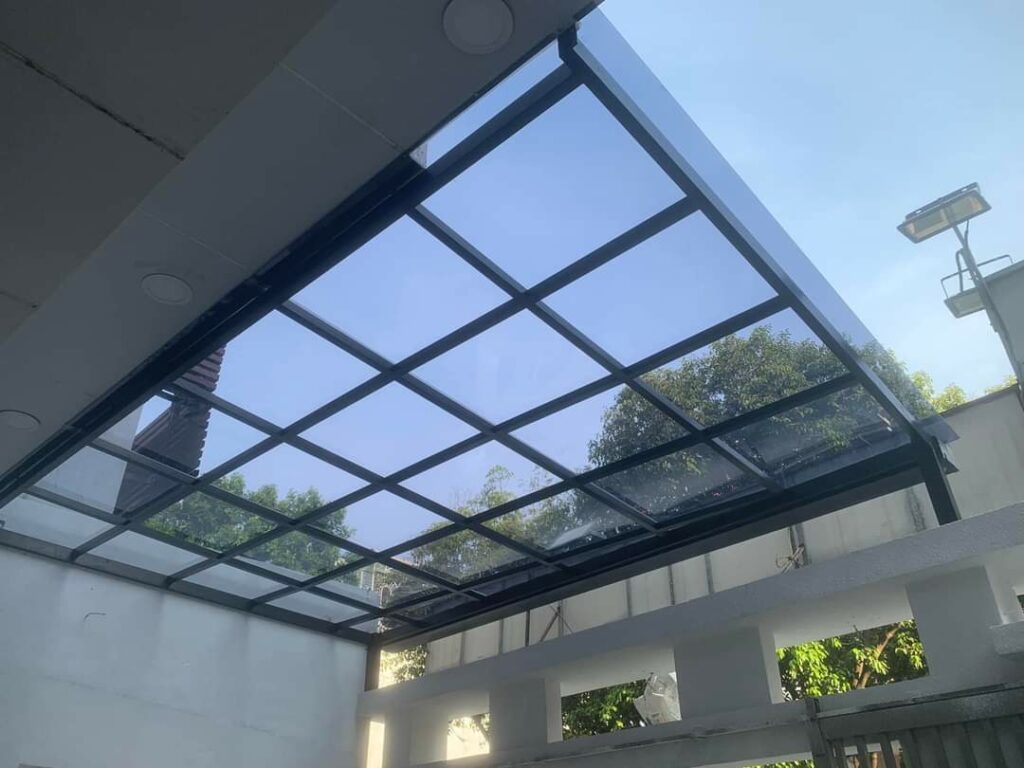
Polycarbonate roofing (shortened as poly roofing) is a type of roof sheeted with polycarbonate sheets – a high-tech engineering plastic material having capacities for good light transmission, load resistance, heat insulation, and anti-UV protection. This is a popular choice for categories such as: rooftop coverings, skylights, parking lots, porches, factory day-lighting roofs, etc.
Depending on needs, you can choose:
-
Solid poly sheets (strong light transmission, high durability),
-
Hollow poly sheets (lightweight, heat insulating, cost-saving),
-
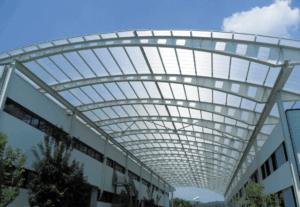
Corrugated poly sheets (replacing corrugated day-lighting sheets).
2. Advantages When Constructing Polycarbonate Roofing
✅ Natural light transmission: Helps save daytime lighting electrical power.
✅ Good load resistance, weather durability: Does not shatter brittly like glass, with lifespans from 10–15 years.
✅ Anti-UV, heat insulating: Protects health and inside interiors.
✅ High aesthetics: Many colors, easy to shape, fitting both modern and traditional projects.
✅ Easy construction and maintenance: Fast installation, lightweight material, saving labor.
3. Instructions for technically correct Polycarbonate Roofing Construction
Step 1: Prepare materials and tools
-
Polycarbonate sheets of the correct type, thickness from 5–10 mm.
-
Box steel frames, aluminum profiles, or stainless steel.
-
Stainless steel bolts, rubber washers, H-trim, U-trim, neutral silicon,…
-
Drilling machines, cutting machines, labor safety tools.
Step 2: Construct the roof framework
-
Calculate frameworks having a minimum slope of 5–10% for good water drainage.
-
Distance between support bars: 600–1000 mm depending on sheet type.
-
Ensure the framework is solid, not sagging, and not warped.
Step 3: Cut poly sheets and place onto framework
-
Cut correct dimensions, leave thermal expansion gaps from 3–5mm between sheets.
-
Place correct side of anti-UV layer facing out (usually has writing or stamps).
-
Use H-trim to connect sheets, U-trim to cap sheet ends (for hollow sheets).
Step 4: Fix sheets using screws
-
Drill holes wider than screws by 1–2mm so sheets have expansion room.
-
Use screws with waterproof rubber washers, tighten moderately.
-
Do not drill near sheet edges to avoid cracking.
Step 5: Waterproofing finishing
-
Pump neutral silicon into connection gaps and screw heads.
-
Check carefully interface positions between poly sheets and walls, water gutters, etc.
4. Important Notes When Constructing Poly Roofing
-
Do not remove the protective film layer of poly sheets before completing installation.
-
Do not use acidic silicon, because it can cause staining or sheet cracking.
-
Do not step directly onto poly sheets, planks must be placed if working on the roof.
-
Clean the roof periodically, do not use strong chemicals (like petrol, oil, acetone).
5. Newest Polycarbonate Roofing Construction Price Quote
| Category | Unit Price (VND/m²) | Notes |
|---|---|---|
| Supply & install 6mm hollow poly sheets | 550.000 – 750.000 | |
| Supply & install 5mm solid poly sheets | 800.000 – 1.200.000 | 10-year warranty |
| Accessories: screws, H, U trim, silicon | Calculated separately | Depending on project |
6. Conclusion
Constructing polycarbonate roofing is a smart day-lighting, economical, and aesthetic solution for every project from civil to industrial. To guarantee durability and absolute leak prevention capabilities, it is necessary to comply with correct technical construction processes. If you have demands installing quality poly roofing, please contact reputable construction units for detailed consultation and best price quotes.
✅ Are you looking for a professional polycarbonate roofing construction unit?
📞 Contact immediately for free consultation and on-site survey!
Bài viết liên quan:
 Affordable Home Renovation Consultation in Dong Nai
Affordable Home Repair Consultation in Dong Nai Affordable Home Repair Consultation in Dong Nai – Dang Phat Construction always brings the best quality service to its customers. Just send us your requirements, and Dang Phat's staff will quickly receive the information, provide dedicated consultation, and bring the most optimal solution! Reasons for home renovation and repairs The house has degraded:
 Villa Renovation & Upgrade Services in Long Khanh
Villa Renovation and Upgrade Services Villa Repair – Your Villa is degrading and you want to upgrade it into a modern, smart Villa while still maintaining its unique inherent beauty. Come immediately to Dang Phat Construction, we will repair and renovate the villa to help make the house more spacious and convenient. 5 reasons you should upgrade and repair your
 Affordable Factory & Warehouse Repair Services
The demand for factory and warehouse repairs in Bien Hoa, Binh Duong, Dong Nai, and Long An is increasingly rising. Many companies and factories are anxiously searching for a reputable, quality, yet affordable provider for their needs. Dang Phat confidently undertakes that work for you with reasonable costs and committed project quality. We are proud to be a factory and
 Affordable Factory Concrete Flooring Contractor in Dong Nai
Specialized unit for affordable, reputable, quality factory concrete floor pouring Pouring factory floor concrete or doing flooring work is very important, contributing a significant part to the overall quality of the project. As such, the factory floor in the design must guarantee the ability to: Bear load well Withstand environmental invasion and insect damage Be easy to clean and wipe
 Factory Metal Roof Repair & Replacement in Bien Hoa
Factory metal roof repair – Recently, many businesses have chosen to install metal roofs for factory and warehouse structures thanks to the outstanding advantages of this material. However, after a period of time, metal roofs also encounter damage problems. Therefore, if encountering the below signs, businesses need to contact a factory metal roof repair unit in HCMC to replace